


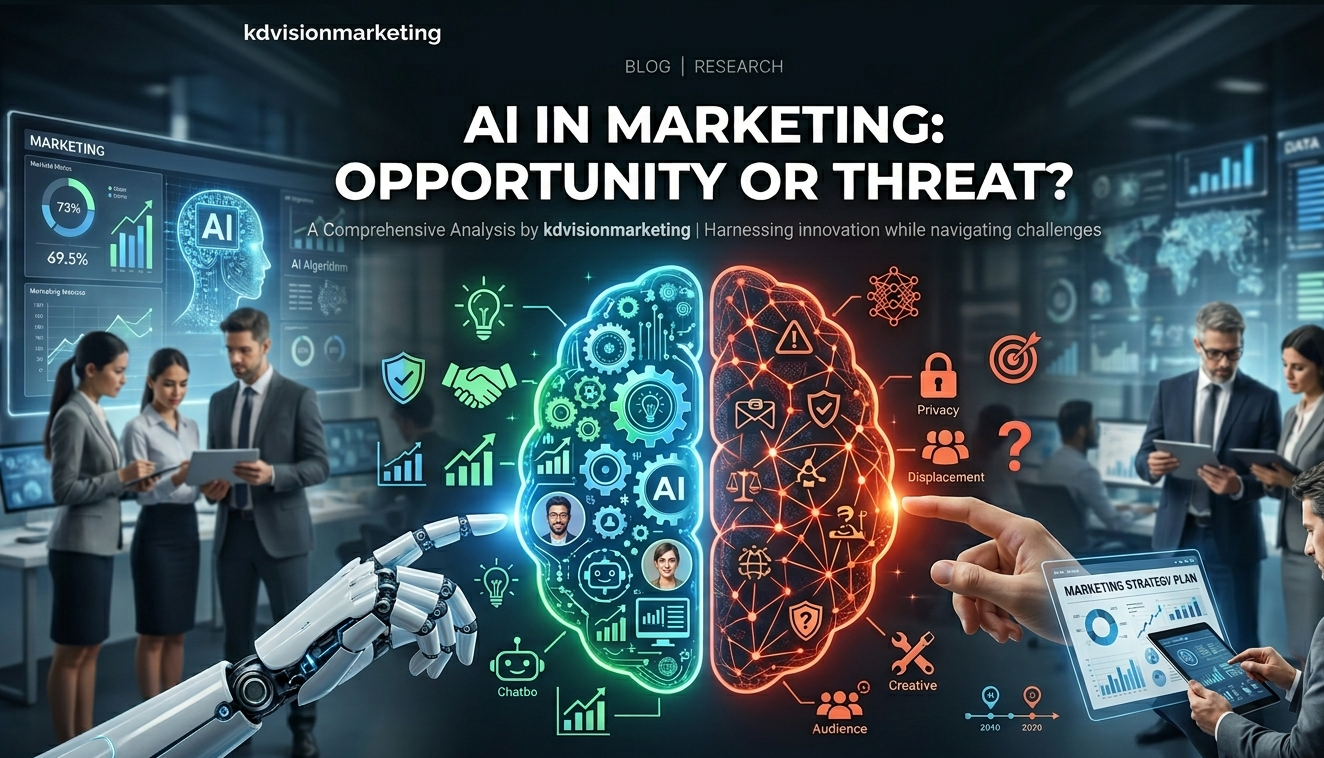
Artificial Intelligence is rapidly transforming the marketing landscape, changing how businesses connect with customers, create campaigns, and drive growth. As AI adoption increases, an important question continues to emerge—is AI a major opportunity for marketers, or does it pose a threat? The reality is that it can be both, depending on how it is used. Understanding both sides is essential for businesses looking to stay competitive.
1. Opportunity: Smarter Automation
One of AI’s biggest advantages is automation. Marketers can automate repetitive tasks such as email sequences, ad optimization, customer support, and campaign reporting. This saves time, improves efficiency, and allows teams to focus more on strategy and creativity.
2. Opportunity: Better Personalization
Modern consumers expect personalized experiences, and AI makes this easier to deliver. By analyzing customer behavior and preferences, AI helps businesses create targeted ads, personalized recommendations, and customized communication that can improve engagement and conversions.
3. Opportunity: Data-Driven Decision Making
AI can process large amounts of data faster than humans, helping marketers identify patterns, predict trends, and make smarter decisions. This allows businesses to optimize campaigns, improve targeting, and respond more effectively to changing market behavior.
4. Opportunity: Improved Content Support
AI is also becoming a valuable support tool for content creation. From idea generation and keyword research to drafting content and optimizing copy, AI can help marketers work faster. When combined with human creativity, it can strengthen overall marketing performance.
5. Threat: Overdependence on Automation
While automation offers benefits, relying too heavily on AI can create problems. Marketing that feels too automated may lose authenticity and the human connection that customers value. Trust and emotional engagement still require a human touch.
6. Threat: Concerns About Job Disruption
AI has raised concerns about replacing certain marketing roles. While some tasks may become automated, the bigger shift is often in role evolution rather than elimination. Still, marketers who fail to adapt to AI-driven changes may face challenges.
7. Threat: Data Privacy and Ethical Risks
AI depends on data, which brings privacy concerns. Businesses must use customer data responsibly and transparently. Poor data practices or unethical AI use can damage trust and create serious reputational risks.
8. Threat: Generic or Low-Quality Content
AI-generated content can sometimes lack originality, accuracy, or brand personality. Without human oversight, businesses risk producing content that feels generic or disconnected from audience needs. Quality control remains critical.
9. The Real Answer: Balance Is Key
The debate is not really AI versus human marketers. The real opportunity lies in combining both. AI can improve speed, efficiency, and insights, while humans bring strategy, creativity, and emotional intelligence. Businesses that balance technology with human expertise are likely to see the strongest results.
Conclusion
AI in marketing is not simply an opportunity or a threat—it is both, depending on how it is used. When applied strategically, AI can unlock growth, improve personalization, and strengthen marketing performance. But businesses must also manage risks related to overautomation, ethics, and quality. The future of marketing belongs to brands that use AI as a tool to enhance human-led strategy, not replace it.